When people discover 3D printing, one of the first questions they ask is: “What’s the best filament to use?”
The truth is that there isn’t one single “best” material. The right filament depends on where the part will be used, how much stress it will experience, and the environment it will be exposed to.
At KcPrintWorks, we make everything from tabletop gaming organizers and storage systems to custom functional parts. Over the years, we’ve printed thousands of hours using PLA, PETG, and ASA. Here’s a practical breakdown of when each material makes sense.
Quick Answer
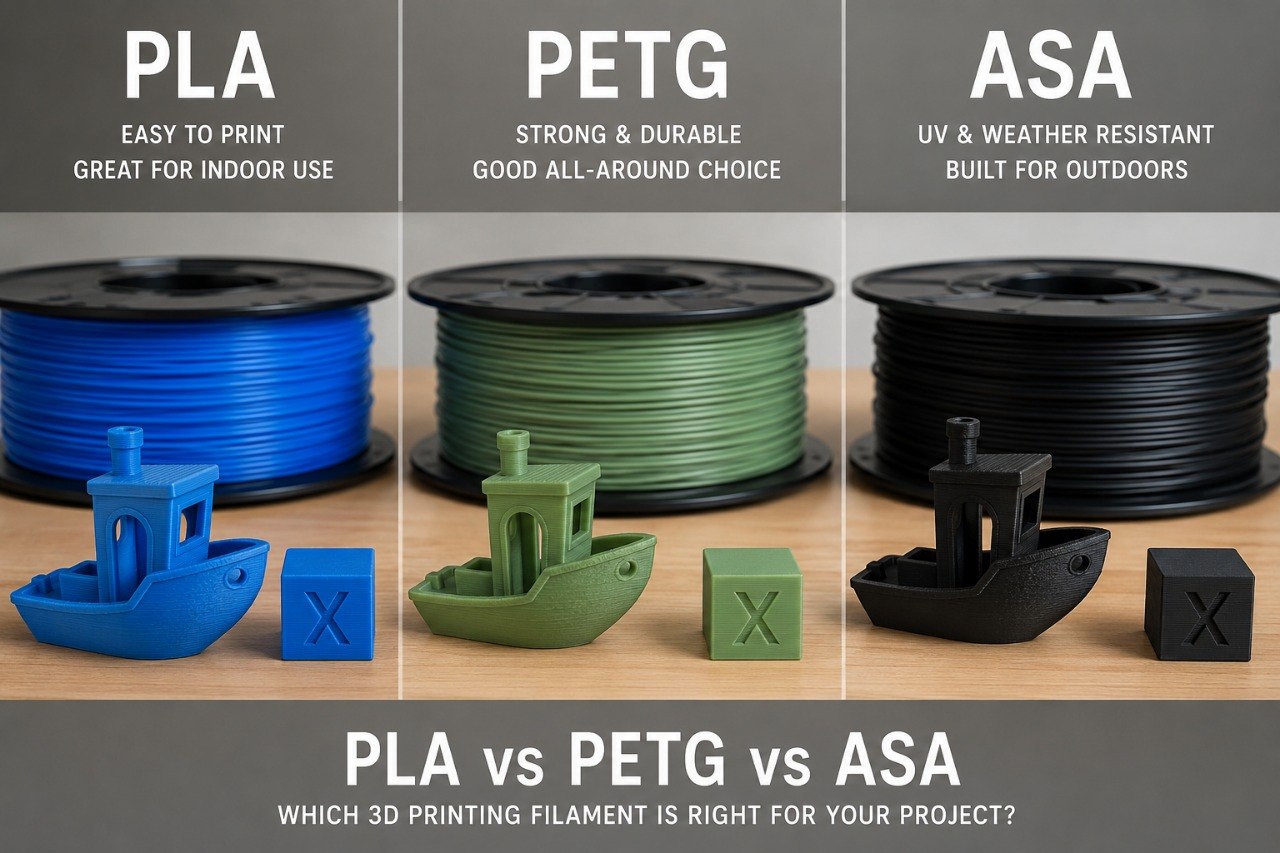
- Choose PLA for indoor projects, prototypes, display pieces, board game accessories, and decorative prints.
- Choose PETG for stronger functional parts, tool holders, workshop items, storage bins, and parts that may see moisture.
- Choose ASA for outdoor applications, UV exposure, weather resistance, and higher-heat environments.
PLA: Easy to Print and Great for Indoor Use
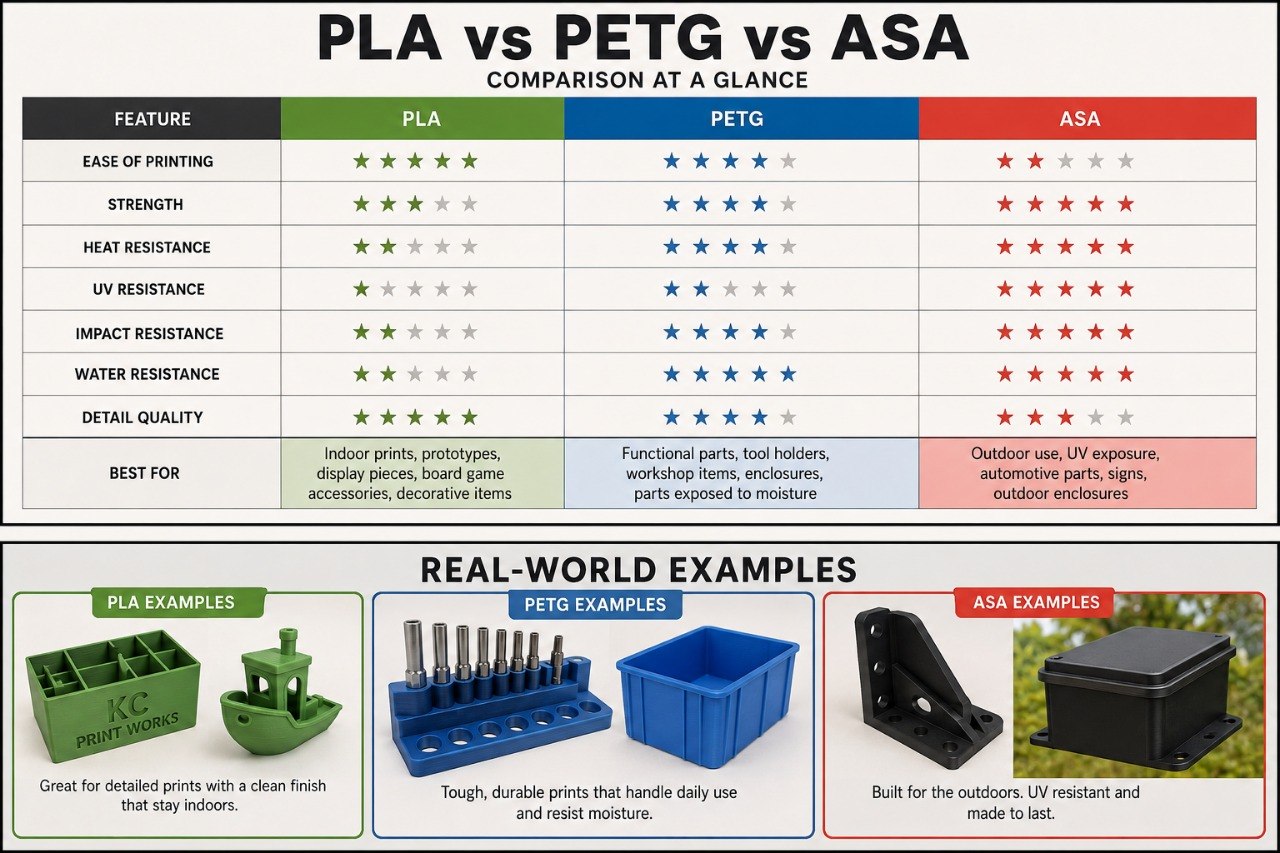
PLA is usually the easiest filament to print. It produces clean details, has minimal warping, and works well for products that will stay indoors.
For tabletop gaming accessories, display pieces, prototypes, and decorative organizers, PLA is often the best choice. It gives a clean finish and is reliable for detailed prints.
The tradeoff is heat resistance. Standard PLA begins to soften at approximately 55–60°C / 131–140°F, so it is not ideal for hot cars, direct summer sun, or outdoor use.
PETG: Durable, Moisture-Resistant, and Good All Around
PETG sits between PLA and ASA. It is tougher than PLA, has strong layer adhesion, handles impact better, and resists moisture more effectively.
That makes PETG a solid choice for functional parts, tool holders, workshop storage, bins, enclosures, and parts that may see everyday wear.
PETG can be a little trickier to print than PLA because it may string more and usually needs more tuning. For many functional indoor parts, though, it is a strong all-around option.
ASA: Built for Outdoor and High-Performance Use
ASA is designed for tougher environments. It offers excellent UV resistance, weather resistance, and better heat resistance than PLA or PETG. ASA can handle temperatures up to approximately 93°C / 199°F.
This makes ASA a strong choice for outdoor mounts, brackets, weather-resistant enclosures, signs, automotive parts, and anything that may sit in sunlight or changing weather.
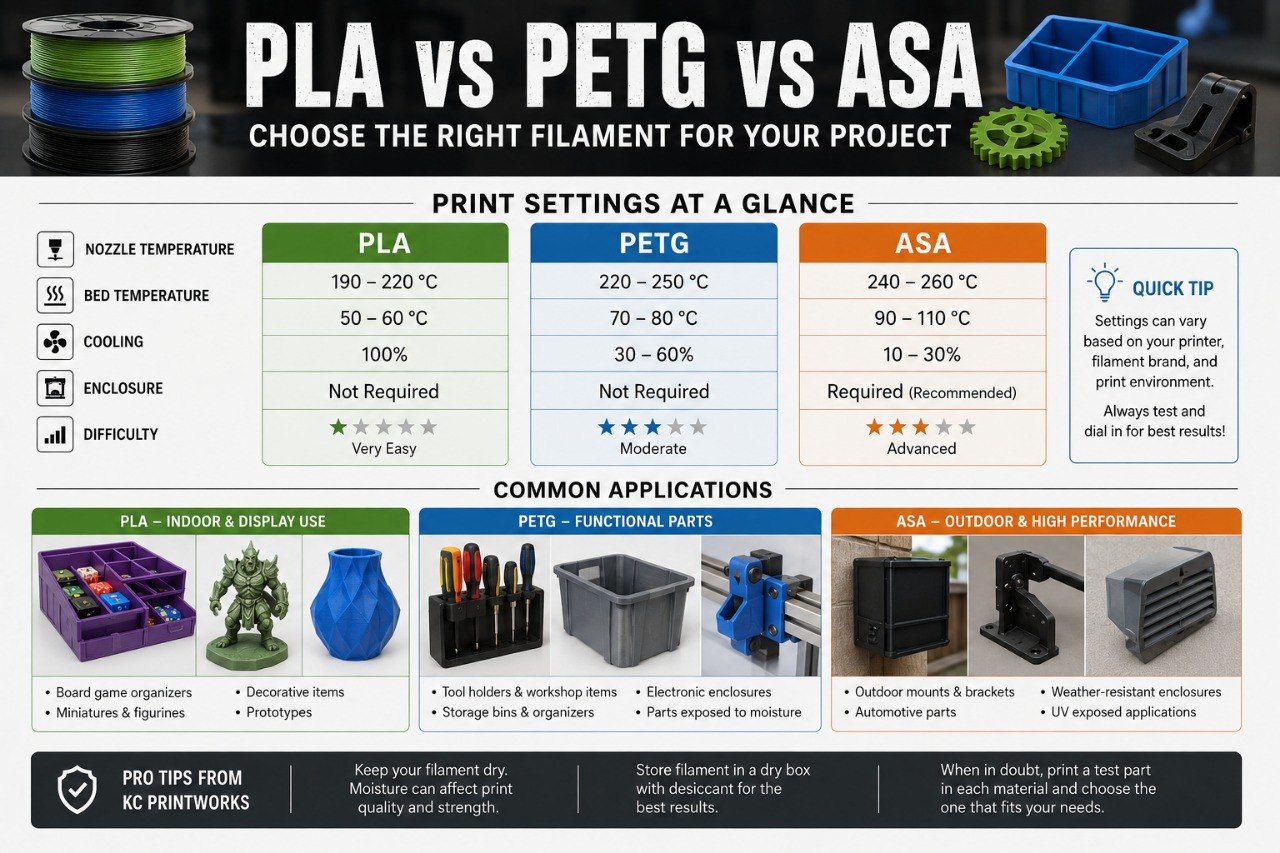
The downside is print difficulty. ASA usually needs higher temperatures, good ventilation, and an enclosure to reduce warping and improve print quality.
Which Filament Should You Choose?
For most indoor products, PLA is the cleanest and easiest option. For parts that need more strength or moisture resistance, PETG is a great step up. For outdoor use, sun exposure, and tougher environments, ASA is usually the better material.
If you are not sure which material is right for your project, the safest approach is to start with the environment first: indoor, functional, or outdoor. From there, the material choice becomes much easier.
Sources
- All3DP — Glass transition temperatures for 3D printing materials
- UltiMaker — Material comparison guide
- Prusa Research — ASA material guide
- Siraya Tech — ASA material properties